

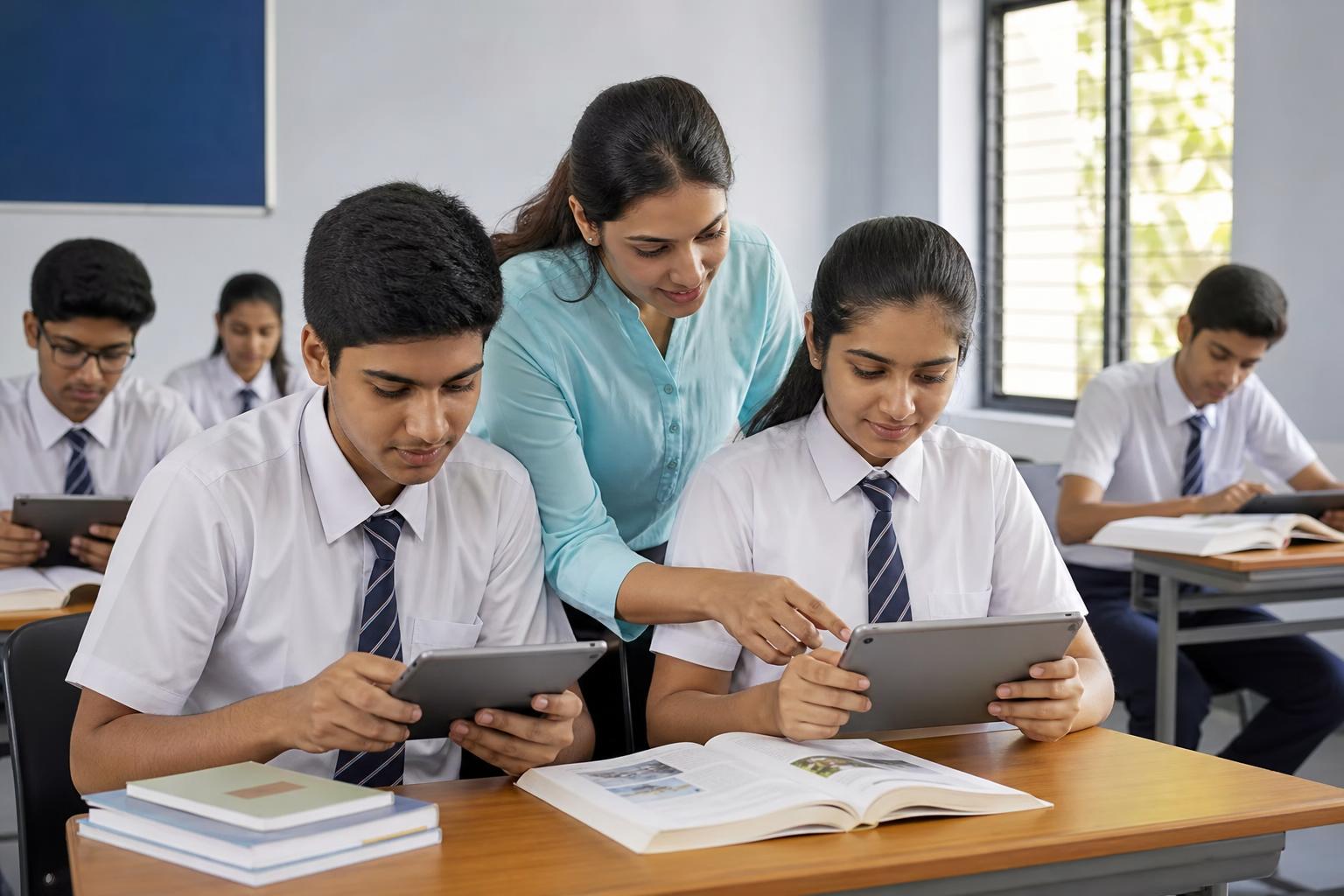
The Press Information Bureau has outlined the role of DIKSHA, the Digital Infrastructure for Knowledge Sharing platform, in India’s school education system. The platform provides access to curriculum-linked digital learning materials for students and teachers in multiple languages.
DIKSHA is part of the Ministry of Education’s PM e-Vidya initiative, which focuses on supporting learning through online means. It is described by the government as the country’s One Nation, One Digital Platform for school education.
The platform was launched in 2017. It is led by the National Council of Educational Research and Training (NCERT) in collaboration with the Central Institute of Educational Technology (CIET).
What DIKSHA offers
DIKSHA is an open-source platform. According to the PIB note, it can be customised for different requirements, which has helped its adoption by various education boards in almost all states and Union Territories.
The platform covers digital learning material for K–12 education. This includes content from foundational literacy and numeracy to senior secondary levels. Its resources are meant to support classroom teaching as well as learning outside the classroom.
Students and teachers can access digital content linked to the curriculum. The material includes media-rich and interactive resources such as 2D and 3D animations, augmented reality experiences, simulations, virtual labs and sign language videos.
QR-coded textbooks and inclusive formats
One of the features mentioned in the PIB release is the use of QR-coded Energised Textbooks. These connect printed NCERT books with digital resources such as videos, interactive material and teacher guides.
The platform also includes features aimed at differently-abled learners. These include DAISY format, text-to-speech support and Indian Sign Language videos. These tools are intended to make learning material easier to access for a wider group of students.
DIKSHA supports both online and offline use. Learners can download content in advance and use it later without an active internet connection. This offline access is an important feature for users in areas where connectivity may not be consistent.
Practice, assessment and teacher training
The platform includes practice questions, detailed solutions, adaptive assessments and competency-based question banks. The PIB note says these tools help identify learning gaps and support timely remediation.
DIKSHA is also used for teacher professional development. It supports NISHTHA and state-specific teacher professional development modules. These modules are self-paced and certified, allowing educators to complete training through the platform.
The government’s note also describes DIKSHA as a system for content creation, curation, use and analytics. It says the platform is aligned with the National Education Policy 2020.
Content review and participation
DIKSHA is designed to allow decentralised participation while maintaining content quality. The PIB release says its structure enables contribution and includes content validation through periodic review.
This means different education bodies can contribute material while the platform continues to follow review processes for quality standards. The source does not provide detailed figures for the number of contributors or reviewed materials.
Coverage across states and Union Territories
The PIB release refers to key statistics as on 27 June 2026 and includes a section on registered users by state and Union Territory. The supplied source text does not include the actual user numbers, so they are not listed here.
Based on the information shared by PIB, DIKSHA is intended to connect learners, teachers, institutions and learning resources across regions and languages. Its main focus remains school education, with digital access to curriculum-based material and support for teacher training.
Source: Press Information Bureau, Government of India.


