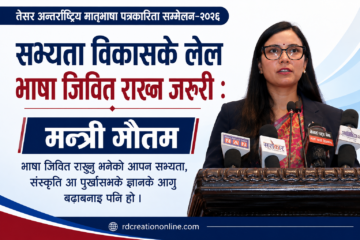

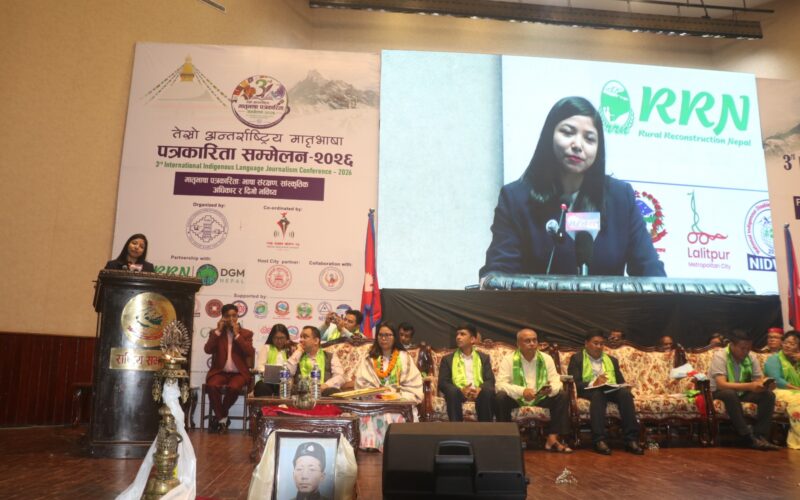
काठमाडौँ । काठमाडौँ महानगरपालिकाके कार्यवाहक नगरप्रमुख सुनिता डंगोल मातृभाषा पत्रकारिता आ भाषिक अधिकार समावेशी लोकतन्त्र, अभिव्यक्ति स्वतन्त्रता आ सांस्कृतिक अधिकारसँग प्रत्यक्ष रूपमे जोडल रहल बताइली।
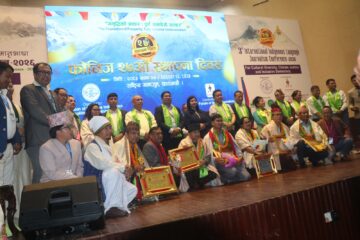
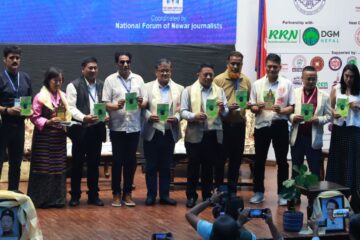
नेपाल आदिवासी जनजाति पत्रकार महासंघ (फोनिज) संघीय समितिद्वारा काठमाडौँमे बुधबार आयोजना करल ‘तेसरा अन्तर्राष्ट्रिय मातृभाषा पत्रकारिता दिवस–२०२६’ के समापन समारोहमे बोलते उहाँ मातृभाषा पत्रकारिता कोनो एक समुदायके मात्र विषय नरहल बताइली।
“मातृभाषा पत्रकारिता एकटा समूहके मात्र विषय नै हो। इ भाषिक अधिकारसँग जोडल बा। समावेशी लोकतन्त्रसँग जोडल विषय हो। अभिव्यक्ति स्वतन्त्रताके साथसाथै सांस्कृतिक अधिकारसँग भी जोडल बा,” उहाँ कहलि।
मातृभाषा पत्रकारिता आउर मजबुत बनावत खोजमूलक, तथ्यपरक, सत्य, समावेशी आ जनउत्तरदायी पत्रकारिता करेके उहाँ पत्रकारनसे आग्रह करली।
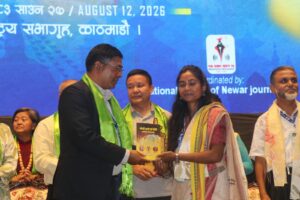
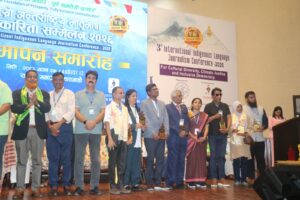
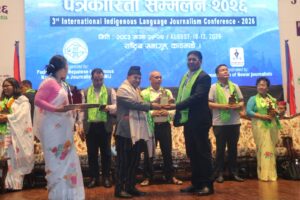
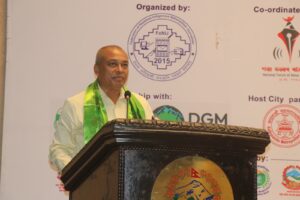
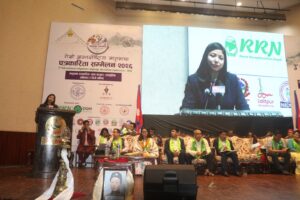
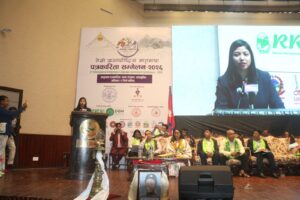
काठमाडौँ महानगरपालिकाले स्थानीय भाषा, संस्कृति आ पहिचानके संरक्षण तथा प्रवर्द्धनके खातिर स्थानीय पाठ्यक्रममे स्थानीय भाषाके समावेश करके कार्यान्वयन कर रहल जानकारी उहाँ देली।
कार्यक्रममे आदिवासी जनजाति महासंघके अध्यक्ष निमा ह्योल्मो लामाले समयअनुसार मातृभाषा पत्रकारिता सम्मेलन आयोजना होखल महत्वपूर्ण रहल बतावत संविधानसे सुनिश्चित करल अधिकारके व्यवहारमे कार्यान्वयन करेके जरुरी रहल बताइली।
प्रेस काउन्सिल नेपालके प्रशासकीय अधिकृत झविन्द्र भुषालले मातृभाषामे पत्रकारिता प्रवर्द्धनके खातिर नीतिगत व्यवस्था करल रहल बताइली। मातृभाषी पत्रकारनके प्रोत्साहन करे खातिर पुरस्कारलगायत कार्यक्रम सञ्चालन कर रहल उहाँके भनाइ रहल।
फोनिजके अध्यक्ष लक्की चौधरी मातृभाषी पत्रकार स्थानीय तहमे विभिन्न समुदायके नागरिकसँग प्रत्यक्ष सम्पर्कमे रहल आ स्थानीय समुदायके आवाज तथा सूचना सरकारसमक्ष पुर्यावेके महत्वपूर्ण माध्यम रहल बताइली। राज्यले मातृभाषी पत्रकारिताके महत्व बुझके थप नीतिगत पहल करेके उहाँ जोड देली।
बङ्गलादेशी पत्रकार साहानाज बेगमके नेपाली–बङ्गाली मन्तव्य
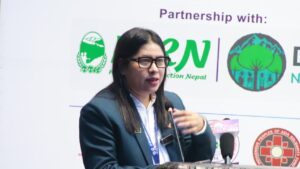
सम्मेलनअन्तर्गत आयोजना करल शुभकामना कार्यक्रममे बङ्गलादेशके पत्रकार साहानाज बेगम नेपाली आ बङ्गाली भाषामे शुभकामना मन्तव्य देत नेपाली चेलीप्रति सम्मान व्यक्त करेवाला कविता प्रस्तुत करली।
मातृभाषा, संस्कृति आ पहिचानके संरक्षणमे सञ्चारमाध्यमके भूमिका महत्वपूर्ण रहल बतावत उहाँ नेपाल आ बङ्गलादेशबीचके सांस्कृतिक सम्बन्ध आउर मजबूत बनावेमे अन्तर्राष्ट्रिय सम्मेलनके महत्वपूर्ण योगदान रहल बताइली।
नेपाली चेलीके साहस, संघर्ष, संस्कार आ योगदानके समेटके उहाँ कविता वाचन करल समय सभाहलमे उपस्थित सहभागी भावुक बनल रहलन। नेपाली आ बङ्गाली दुवै भाषामे प्रस्तुत उहाँके मन्तव्य आ कविता कार्यक्रमके आकर्षणके प्रमुख क्षण बनल रहल।
कार्यक्रममे पूर्वमन्त्री राजकुमार लेखी, फोनिजके पूर्वअध्यक्ष डण्ड गुरुङ, गजुरधन राई, पत्रकार विमला तुम्खेवा, प्रेस युनियनके पूर्वसचिव केबी राना, प्रेस सेन्टर नेपालके महासचिव मनोज घर्ती मगर, प्रेस चौतारी नेपालके अध्यक्ष गणेश पाण्डेलगायत विदेशी पाहुना पत्रकार शुभकामना मन्तव्य देलन।
मातृभाषी पत्रकारके सवालमे नीतिगत बहस
साउन २५ गतेसे सुरु भइल तीन दिने सम्मेलनअन्तर्गत बुधबार ‘मातृभाषी पत्रकारके सवाल आ नीतिगत पहल’ विषयमे बहस करल गइल।
बहसमे बागमती प्रदेशके सञ्चार रजिष्ट्रार रेवती सापकोटा, विज्ञ डा. घमराज लुइटेल, विज्ञ डा. मुक्तसिंह लामा आ रश्मिला प्रजापति सहभागी रहलन। छलफलके सहजीकरण जेनजी अभियन्ता सबनम लामाले करली।
फोनिजके तीन दिने सम्मेलनले मातृभाषा पत्रकारिताके संरक्षण, संवर्द्धन आ प्रवर्द्धनके खातिर आठबुँदे प्रस्तावित घोषणापत्र जारी करल बा।
सम्मेलनमे भारत, श्रीलंका, साउदी अरब, भुटानलगायत विभिन्न देशके पत्रकार तथा जर्नलिष्ट फोरमके प्रतिनिधिनके सहभागिता रहल। सम्मेलनले मातृभाषा पत्रकारिताके भाषिक, सांस्कृतिक आ लोकतान्त्रिक अधिकारके महत्वपूर्ण माध्यमके रूपमे स्थापित करेके आवश्यकता औंल्यावल बा।
Mother-Tongue Journalism Linked to Inclusive Democracy and Linguistic Rights: Sunita Dangol
Kathmandu. Kathmandu Metropolitan City Deputy Mayor Sunita Dangol has said that mother-tongue journalism and linguistic rights are directly connected with inclusive democracy, freedom of expression and cultural rights.
Speaking at the concluding ceremony of the Third International Mother-Tongue Journalism Day–2026, organized by the Federation of Nepalese Indigenous Nationalities Journalists (FoNIJ) in Kathmandu on Wednesday, Dangol said mother-tongue journalism is not limited to any particular community but is a matter of wider social and democratic concern.
“Mother-tongue journalism is not merely the issue of a particular group. It is connected with linguistic rights and inclusive democracy. Along with freedom of expression, it is also linked with cultural rights,” she said.
Dangol called on mother-tongue journalists to further strengthen investigative, factual, truthful, inclusive and accountable journalism.
She also said that Kathmandu Metropolitan City has been implementing local curricula incorporating local languages in order to promote and preserve local languages, cultures and identities.
Speaking at the programme, Nima Hyolmo Lama, President of the Federation of Indigenous Nationalities, said that organizing the mother-tongue journalism conference at the present time was significant. He stressed the need to effectively implement the rights guaranteed by the Constitution.
Jhabindra Bhusal, Administrative Officer at the Press Council Nepal, said that policy arrangements have been made to promote journalism in mother tongues. He said the Press Council has also been carrying out initiatives, including awards and incentives, to encourage mother-tongue journalists.
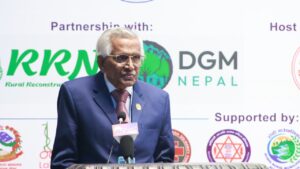
FoNIJ President Lucky Chaudhary said mother-tongue journalists maintain direct contact with people from different communities at the local level and serve as an important bridge for taking local issues and information to the government. He urged the state to recognize the importance of mother-tongue journalism and introduce further policy initiatives for its development.
Bangladeshi Journalist Presents Message in Nepali and Bengali
During a goodwill programme organized as part of the conference, Bangladeshi journalist Sahanaz Begum delivered her message in both Nepali and Bengali and presented a poem paying tribute to Nepali women.
She highlighted the role of media in preserving mother tongues, culture and identity and said international conferences of this nature could contribute significantly to strengthening cultural relations between Nepal and Bangladesh.
Her poem highlighting the courage, struggles, traditions and contributions of Nepali women deeply moved the participants. Her presentation in both Nepali and Bengali became one of the memorable highlights of the programme.
Former Minister Raj Kumar Lekhi, former FoNIJ presidents Danda Gurung and Gajurdhan Rai, journalist Bimala Tumkhewa, former Press Union Secretary KB Rana, Press Center Nepal General Secretary Manoj Gharti Magar, Press Chautari Nepal President Ganesh Pandey and international guest journalists also delivered goodwill messages at the programme.
Discussion on Policy Initiatives for Mother-Tongue Journalists
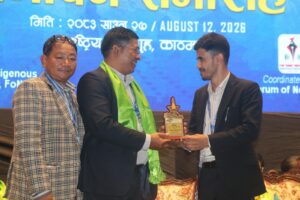
The three-day conference, which began on August 9, included a discussion on “Issues of Mother-Tongue Journalists and Policy Initiatives” on Wednesday.
Bagmati Province Communication Registrar Revati Sapkota, experts Dr. Ghamraj Luitel and Dr. Mukta Singh Lama, and Rashmila Prajapati participated in the discussion. The session was moderated by Gen-Z activist Sabnam Lama.
The three-day FoNIJ conference also issued a proposed eight-point declaration focusing on the preservation, promotion and development of mother-tongue journalism.
Journalists and representatives of journalist forums from India, Sri Lanka, Saudi Arabia, Bhutan and other countries participated in the conference. The conference emphasized the need to recognize mother-tongue journalism as an important instrument for protecting linguistic and cultural rights and strengthening inclusive democracy.